


Views: 0 Author: Site Editor Publish Time: 2026-10-17 Origin: Site


Monobloc heat pumps keep their hydronic circuit outside the building envelope. This architecture exposes the primary heat exchanger and external piping directly to ambient freezing temperatures. Unlike split systems that keep water safely indoors, monoblocs face a severe vulnerability during winter grid failures. When power drops, circulation stops immediately. In sub-zero conditions, stagnant water expands rapidly by roughly 9% as it freezes. This physical expansion exerts massive pressure, leading to ruptured plate heat exchangers, burst pipes, and total system failure.
Protecting this equipment requires a layered defense strategy. Relying on a single point of failure invites disaster during severe weather events. You must implement safeguards that protect the unit without compromising daily heating efficiency. We will evaluate chemical, mechanical, electrical, and procedural safeguards to protect external hydronic circuits from catastrophic freeze damage during prolonged power outages.
Chemical vs. Mechanical Trade-offs: Relying solely on glycol impacts heat transfer efficiency and requires ongoing maintenance, whereas mechanical anti-freeze valves offer fail-safe drainage but require manual system refilling post-event.
Circulation is the First Line of Defense: Maintaining a low-wattage backup power supply strictly for the circulation pump can prevent freezing for days without needing to power the compressor.
System Design Dictates Vulnerability: Proper low-temperature heat pump system design must account for pipe insulation thickness, buffer tank thermal mass, and wind exposure to calculate accurate "time-to-freeze" metrics.
Defrost vs. Outage Protection: Standard heat pump defrost mode requires active grid power to melt coil frost; it provides zero protection for the hydronic circuit during a total power outage.
Restart Protocols Matter: Improperly restarting a heat pump after a prolonged outage can cause electrical surges or compressor damage if ice accumulation isn't cleared first.
An R290 monobloc heat pump contains the entire refrigeration cycle within the outdoor chassis. The R290 propane refrigerant itself resists freezing down to extreme temperatures, posing no risk during an outage. However, the heat transfer process occurs entirely outside the home. The primary flow and return pipes carry vulnerable water, not freeze-resistant refrigerant. The internal brazed plate heat exchanger consists of dozens of alternating ultra-thin stainless steel plates. Water flows on one side of the plate, and refrigerant flows on the other.
If the water inside this brazed plate heat exchanger freezes, the expanding ice crushes the internal metal plates. This rupture allows water to flood the sealed refrigerant circuit. Once water mixes with compressor oil and refrigerant, it creates an acidic sludge that destroys the compressor windings. The entire heat pump is permanently destroyed and requires full replacement.
Several environmental and physical variables determine exactly how long a system survives without power. Ambient temperature, wind chill factor, pipe diameter, and insulation R-value dictate the rate of thermal decay. A robust low-temperature heat pump system design must calculate this decay accurately. Stagnant water in a 1-inch pipe loses heat significantly faster than water in a 2-inch pipe due to the surface-area-to-volume ratio.
Standard closed-cell insulation offers false security during prolonged outages. Insulation delays freezing; it cannot prevent it. Without active heat input or fluid movement, the water temperature eventually equalizes with the ambient air. The table below illustrates estimated time-to-freeze metrics for stagnant water in external hydronic piping during a total power failure.
Pipe Diameter | Insulation Thickness | Ambient Temperature | Wind Conditions | Estimated Time to Freeze |
|---|---|---|---|---|
1 inch (28mm) | 1/2 inch (13mm) | 10°F (-12°C) | 15 mph | 2.5 Hours |
1 inch (28mm) | 1 inch (25mm) | 10°F (-12°C) | Calm | 5.0 Hours |
1.5 inch (40mm) | 1 inch (25mm) | 0°F (-18°C) | 15 mph | 4.5 Hours |
2 inch (50mm) | 1.5 inch (38mm) | 0°F (-18°C) | Calm | 9.0 Hours |
Propylene glycol serves as the most common passive freeze protection method. Installers typically blend pure water with 20% to 30% glycol to lower the freezing point. While effective at preventing solid ice formation, glycol carries a heavy performance penalty. It reduces the specific heat capacity of the fluid. The system must move more fluid to deliver the same amount of heat to the building compared to pure water.
Adding glycol also changes the fluid's specific gravity and kinematic viscosity. The mixture becomes thicker, especially at low temperatures. This increased viscosity raises the pump head pressure. The circulation pump must work harder and consume more electricity to maintain flow rates. This extra pumping energy directly lowers the overall Coefficient of Performance (COP) of the heating system. You must upsize the circulation pump during the initial design phase to handle the thicker fluid.
Glycol is not an install-and-forget solution. The chemical inhibitors blended into the antifreeze degrade over time due to thermal cycling. As these inhibitors break down, the fluid turns acidic. Acidic glycol aggressively corrodes copper piping, brass fittings, and internal pump components. You must perform strict annual maintenance to prevent internal system failure.
Extract a fluid sample from the primary circuit annually before the winter season begins.
Use a calibrated optical refractometer to verify the actual freeze protection point of the mixture.
Test the pH level using digital meters to ensure the fluid remains alkaline (typically between 8.0 and 10.0).
Replace the entire fluid volume every three to five years based on the degradation levels found during testing.
Local environmental regulations strictly govern glycol disposal. You cannot dump degraded glycol into municipal drains or septic systems. Accidental discharge from a blown pressure relief valve poses soil and groundwater contamination risks, requiring expensive hazardous material cleanup.
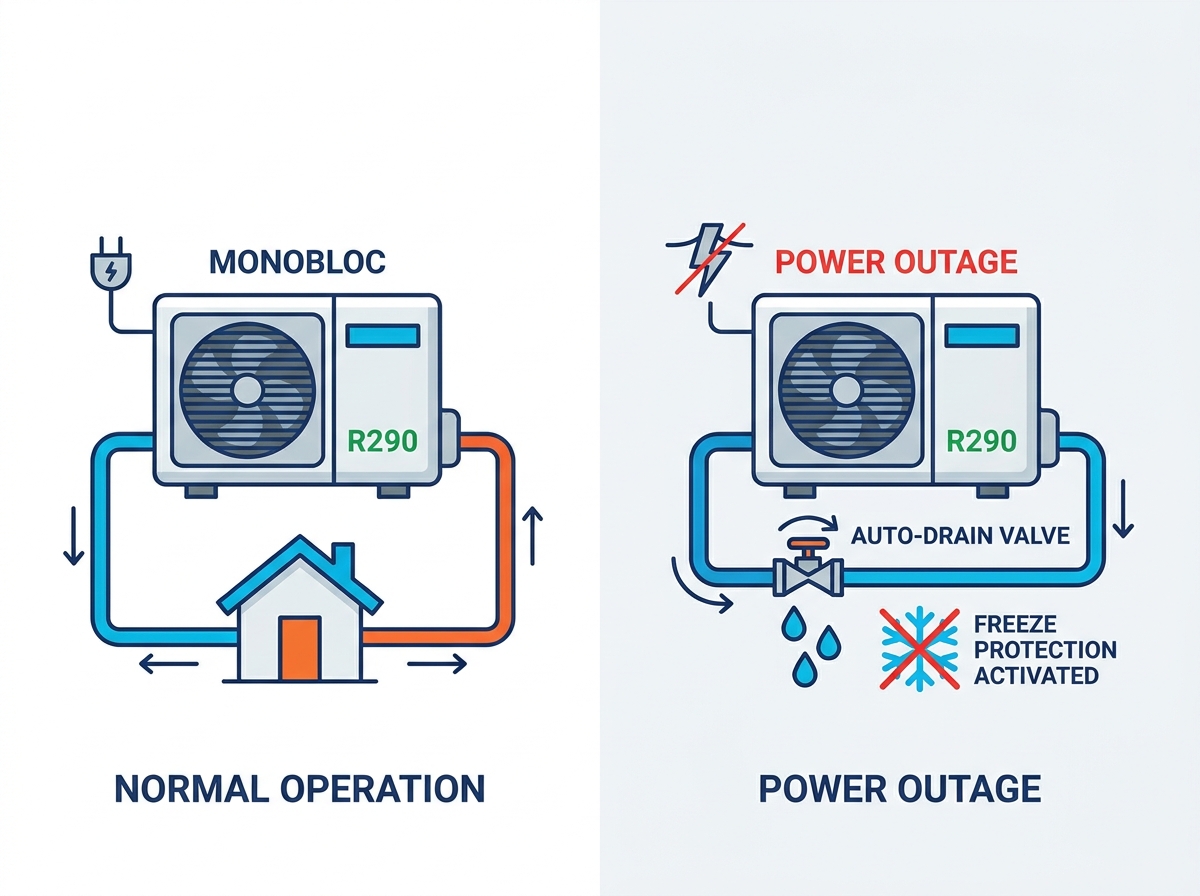
Thermostatic freeze protection valves operate entirely without electricity. They rely on an internal thermostatic wax element directly exposed to the ambient water temperature. When the water temperature inside the pipe drops to approximately 37°F (3°C), the wax contracts. This mechanical action opens a drip port. The valve bleeds freezing water out of the circuit, allowing warmer water from inside the building to flow outward and replace it. If the ambient temperature drops further and the water approaches 34°F (1°C), the valve opens fully, dumping the system water before it can crystallize and expand.
Proper installation dictates the success or failure of anti-freeze valves. You must mount these valves at the absolute lowest points of the external flow and return pipes. Gravity must clear the lines completely; any water trapped in low spots will freeze and burst the pipe. Furthermore, you must install automatic air vents at the highest points of the external piping. If a valve opens at the bottom, a vacuum can form at the top of the pipe, preventing full drainage.
Route discharge tubes away from equipment pads to prevent ice buildup around the chassis.
Ensure discharged water does not flow onto pedestrian walkways or driveways where it creates slip hazards.
Never install valves near external heat sources, exhaust vents, or direct solar gain areas. False temperature readings will prevent the valve from opening during a freeze event.
The primary drawback of mechanical valves is system depressurization. If the valve opens and dumps the water, the hydronic circuit loses all operating pressure. Once grid power returns, the heat pump remains locked out on a low-pressure error. The system will not operate until you manually refill the circuit, re-pressurize the expansion vessel, and purge all air from the lines.
Extreme cold snaps cause nuisance tripping. If the circulation pump fails, or if a dirty strainer drops the flow rate significantly, the water in the external pipes cools rapidly. The anti-freeze valve will open and dump the system water even if the grid power remains fully active. This leaves the building without heat until manual intervention occurs.
Powering an entire monobloc unit during an outage requires massive surge capacity to start the compressor. However, powering only the circulation pump requires very little energy. A standard Uninterruptible Power Supply (UPS) or a small lithium iron phosphate (LiFePO4) battery bank handles this load easily. Modern Electronically Commutated Motor (ECM) circulator pumps draw minimal power compared to older permanent split capacitor motors.
A 40W to 100W ECM circulator pump can run for 24 to 48 hours on a modest 100Ah 12V battery backup paired with a small inverter. Moving water resists freezing significantly longer than stagnant water. By keeping the circulator running, you continuously draw upon the indoor thermal mass. The pump pulls warm water from the indoor buffer tank and underfloor loops, pushing it through the outdoor heat exchanger. This continuous flow prevents ice crystals from forming, protecting the outdoor unit using stored indoor heat.
Portable or standby generators provide infinite outage protection, provided you have fuel. Integrating a generator requires a manual or automatic transfer switch to isolate your home from the grid. Modern inverter-driven heat pumps utilize sensitive control boards and variable frequency drives. You must use generators that produce clean sine-wave power. High Total Harmonic Distortion (THD) from cheap construction generators will fry the heat pump's main printed circuit board.
Automatic standby generators start seamlessly during unexpected overnight outages, offering true peace of mind. Manual portable setups require you to brave blizzard conditions to connect cables and pull-start the engine. If the outage occurs while you are asleep or away from home, a manual generator provides zero protection.
Many homeowners dangerously misunderstand heat pump defrost mode. Defrost is an active operational cycle. It clears frost and ice from the outdoor evaporator coil during normal winter operation. The system reverses the refrigeration cycle, pulling heat from the house to melt ice on the outdoor fins. Defrost mode requires full grid power, compressor operation, and reversing valve actuation. It is entirely irrelevant during a grid failure. Defrost mode provides zero protection for the hydronic circuit when the power is out.
Indoor buffer tanks play a massive role in passive freeze protection. A large volume of heated water inside the thermal envelope acts as a thermal battery. If your battery backup maintains circulation, this indoor heat slowly bleeds to the outdoor unit. A 100-gallon buffer tank holds enough thermal energy to keep the outdoor heat exchanger above freezing for days.
Integrating indoor auxiliary emergency heat extends this survival time. Operating a wood stove, pellet stove, or portable electric space heater keeps the indoor ambient temperature high. This heat transfers into the floor loops and buffer tank. As long as the circulator pump runs, this auxiliary heat actively warms the outdoor unit.
External pipe insulation must meet strict commercial standards in low-temperature climates. Standard foam noodles are unacceptable. Use a minimum 19mm to 25mm wall thickness for all external runs. Specify UV-resistant, closed-cell elastomeric foam. You must seal all seams, joints, and miter cuts meticulously with specialized adhesive.
Moisture ingress destroys insulation. If rain or melted snow penetrates the insulation jacket, the water displaces the trapped air. Wet insulation loses its R-value entirely. In sub-zero conditions, wet insulation freezes solid against the pipe, accelerating the time-to-freeze rather than preventing it. Apply a protective PVC or aluminum cladding over the insulation to guarantee absolute waterproofing.
Wind chill drastically accelerates thermal decay. A 20 mph wind removes heat from outdoor hydronic components exponentially faster than still air at the same temperature. Strategic physical windbreaks, snow fences, or slatted enclosures protect the equipment pad from prevailing winter winds.
Enclosure design requires extreme caution. You must block wind without restricting the massive airflow requirements of the heat pump fan. Monoblocs move thousands of cubic feet of air per minute. Restricting the intake or exhaust starves the unit. The discharge air will recirculate back into the intake, plummeting the system efficiency and causing the unit to suffocate in its own cold air.
Regular maintenance serves as your best baseline protection against freeze damage. A poorly maintained system fails faster during an emergency. Change indoor magnetic filters and clean Y-strainers to maintain maximum flow rates. Restricted flow allows water to cool faster in the external pipes.
Ensure the outdoor unit remains clear of autumn leaves and debris. Verify the equipment pad has adequate drainage. Heat pumps produce gallons of water daily during normal defrost cycles. If this water cannot drain away, it forms a thick ice dam around the base of the unit. Clear all snow drifts away from the chassis immediately to prevent the fan blades from freezing solid.
Take critical steps immediately when a power outage begins. Turn the main thermostat off. When the grid eventually stabilizes, power often returns with massive voltage spikes. Keeping the thermostat off prevents the heat pump from attempting to start during these unstable voltage fluctuations.
Perform a strict physical inspection before restoring power to the unit.
Turn the main thermostat off immediately when the outage begins to prevent voltage spike damage.
Clear all accumulated snow or ice from the fan blades, fan guard, and evaporator coils.
Verify the anti-freeze valves have not triggered. If they have, close the isolation valves and begin the refill process.
Turn the breaker on once power stabilizes, but keep the thermostat off. Allow the compressor crankcase heater at least 4 hours to warm the refrigerant before initiating a heating call.
Installers and homeowners need a solid decision framework based on specific climate zones and local grid reliability. No single approach fits every installation. You must balance upfront costs against ongoing efficiency penalties and manual intervention requirements.
Protection Method | Upfront Cost | Efficiency Penalty | Maintenance Required | Best Application |
|---|---|---|---|---|
Propylene Glycol (30%) | Medium | High (Lower COP, higher pumping energy) | Annual testing, fluid replacement every 3-5 years | Off-grid homes, highly unstable grids, severe winter zones |
Anti-Freeze Valves | Low | None (Uses pure water) | Manual refill and air purging if triggered | Stable grids, moderate climates with rare outages |
UPS / Battery Backup (Pump Only) | High | None (Uses pure water) | Battery health monitoring | High-performance systems demanding maximum COP |
Examine manufacturer warranty stipulations closely before finalizing your design. Many manufacturers mandate either glycol or anti-freeze valves for the warranty to remain valid in specific climate zones. Failing to install these approved safeguards instantly voids the warranty.
Freeze damage leaves distinct, undeniable physical evidence. Ruptured plate heat exchangers show clear outward bulging and stress fractures. Manufacturers will deny claims if proper safeguards are missing. Document your installation thoroughly, including photos of anti-freeze valves or refractometer readings of the glycol mixture, to ensure warranty compliance.
Consult with a certified hydronic engineer to calculate your total system volume and thermal mass before selecting a freeze protection method.
Verify your circulation pump sizing and head pressure ratings if you transition from pure water to a glycol mixture.
Specify the exact lowest-point locations for anti-freeze valves and ensure proper drainage pathways before the winter season begins.
Install a dedicated UPS or battery backup wired exclusively to the primary circulation pump to maintain flow during grid failures.
A: Yes, monobloc heat pumps will freeze and burst if water is left stagnant in sub-zero temperatures. Unlike split systems that keep water indoors, monoblocs circulate water outside. Without power, circulation stops, and the stagnant water expands as it freezes, rupturing pipes and heat exchangers.
A: No. Defrost mode requires active grid electricity to reverse the refrigerant cycle, run the compressor, and melt ice on the outdoor coils. During a power outage, the system has no power to initiate or sustain a defrost cycle.
A: Time-to-freeze ranges from 2 to 12 hours. It depends heavily on ambient temperatures, wind chill, pipe diameter, and insulation thickness. High winds and poor insulation accelerate freezing, while thick closed-cell insulation delays the process.
A: Valves maintain pure water efficiency, keeping your COP high, but require manual refilling and air purging if triggered. Glycol reduces system efficiency and requires annual testing, but provides passive protection without needing manual intervention after an outage.
A: Yes. Isolating the circulator pump requires very low wattage, typically 40W to 100W. Running just the pump on a battery prevents freezing by continuously moving warm indoor water from your buffer tank through the outdoor unit.
A: Use covers carefully. Thermal blankets trap residual heat temporarily during an outage, but you must remove them immediately before restoring power. Leaving a cover on restricts airflow, which will suffocate the unit and cause severe compressor damage.
A: Keep the thermostat off until grid power is stable. Clear all snow and ice from the outdoor unit. Check your breakers, verify anti-freeze valves haven't dumped the system water, and allow the crankcase heater time to warm the compressor before turning the thermostat up.


